Tuesday, December 31, 2019

Their love that made the world go round

I've been waiting to make this post for some time. Now that all of those silly Olympians are out of the way, it's time to tell another story - one you have probably heard before. We are going to sing it again, though. And what the heck, why shouldn't we tie in the underworld's second favorite love story while we're at it? It's an old song, an old tale - and it's a tragedy. But we sing it anyway.

I'll might do a more in-depth look at the other children of Kronos later (Hestia, Demeter, Hera, Poseidon, and Zeus) but for now it's time to talk about by far the most interesting of the lot. HADES.

This is, technically, my introduction to "minor" gods - because this post is also about Persephone. But let's not get bogged down in all that. Let's start this story. Long, long ago, when the world was young and her children younger still you may recall that Kronos, the youngest of the Titans who overthrew his father had taken a wife, Rhea, and borne several children. Kronos, however, because of the terrible sin he had committed against his father, and because his mother wasn't super happy with him either, gre paranoid that his own children would overthrow them, and so he ATE each of them while they were still too young. First, Kronos has three daughters - Hestia, Demeter, and Hera. Next he had three sons - Hades, Poseidon, and Zeus. I've already told the tale of how Rhea helped her youngest child escape and later overthrow his father - fulfilling Kronos' fears. I've also mentioned that Zeus, with the help of the giantess Metis, caused his father to regurgitate his swallowed siblings. Because this is a story of inverted power structures, these gods and goddesses are honored more or less in opposite order of their birth - Foremost among the gods is Zeus, and among the goddesses, Hera. Next is Poseidon, and Demeter, and finally Hestia... and Hades. Now for the ladies, this oder isn't super important. They each have their own natural domains of Wife, Lifegiver, and Homemaker. (Please don't see this as an insult of any of these three great goddesses. Being a woman who does traditionally feminine things is NOT to be dishonored. These three fulfil vital and honorable roles, all). The three brothers, however, instead of just finding their own niche, divided the realms of creation up unto themselves. Zeus chose first, and made his seat in Olympos, ruling over the mighty sky. Poseidon was next, and he made his home deep within the mighty sea - some say in Atlantis. And Hades - first born son of the mighty Kronos - to Hades was left no choice but the Underworld.

Now here's a thing. People often heard "the underworld" and think "the afterlife", because the underworld is where people's souls go when they die. And while this is true - Hades is the ruler of the afterlife - the concept of "underworld" is far more broad and important than this in greek thought., because Hades' kingdom is - quite literally - the underground. Everything under the ground belongs to him. And in case it needs pointing out - what is underground is VERY important to all life aboveground. Just as if not more important than the matters of the sea and sky. It's just harder to see.

There's also the fact that the Earth, too, is a goddess - Gaia, mother of all, from whom all things are and to whom all things return. Hades' realm, being contained inside of Gaia, is mystic and primordial in its relation to his grandmother Gaia, in a way which is much more explored than the relationship between Zeus and his own grandfather Sky (Ouranos). (Or Poseidon and his...grandmother's other lover, Pontos). Hades' realm is also just as if not more varied than the Sea and Sky, containing many different geographical features and areas, such as the river Styx, the Elysian fields, the pits of Tartaros, etc.

I'm tempted here to just give a geography lesson on the Greek underworld. So bear with while I provide a few details. The most important featrues of Hades (the place) are its rivers. Now remember, in greek myth rivers are also people (mostly ladies), so these are both places and also noblewomen in Hades' court/world as it were: The River Styx, which is the most powerful and important river in the world. Styx is that upon which the gods make their vows, because a vow upon the river Styx is considered unbreakable. If you're not familiar with how vows work, the idea is that if you swear ON something, you are saying two things 1.) Your vow is as strong, sure, and everlasting as that upon which you swear, and 2.) If you break your vow, the thing upon which you swear has the right and duty to exact revenge upon you. This is why people in antiquity would often swear upon weapons (which is to say - if I break my vow, may this sword strike me dead), and why it is exceedingly dangerous to swear on the Word or Name of God (you're asking him to be your witness and your executioner should you lie or fail).  So Styx is considered as eternal, constant, and powerful as Death itself, and could even bring about the death of a god - even Zeus, should he break an oath made in her name.

Styx is also one of the rivers which Charon, the ferryman of the dead, crosses to escort souls into the underworld, along with the river Archeon. You see, when a person dies their soul passes through a lot of hands. First, their soul is seperated from their body by Thanatos - the god of death/grim reaper. Next, they are escorted by Hermes, god of travellers and breacher of realms, down towards Hades. Hermes leaves them waiting on the shores of the mighty rives styx and Archeon, where the ferryman Charon finds them. IF they came all this way carrying a coin for him - with they ought to have been buried with, usually with the coin in their hand or more traditionally on their eyes or tongue - then they may pay for passage into the underworld proper. If they cannot pay, they are cursed to wait and wander on the barren shores for one hundred years. This is why burial rites are so important!

The other rivers in Hades include the river Lethe - the only river of (relavite) mercy to be fond here. To drink the water of the river Lethe is to forget everything that came before. You will not remember the life you lived, or anything else. Lethe flowed through the cave of Hypnos (god of Sleep), and some say that if you drank from its waters, having forgotten everything, you would then be reincarnated on earth again (Reincarnation myths are sparse, but not entire missing from Greek thought). as well as the river Phlegethon (which is terrible to say), a river of fire which leads to Tartaros, and Coctyos, the river of wailing (I don't know much about it really).

Within this realm there are also special areas which only certain people may enter or exit - and who goes where is determined by the King and Judge - the dikastes basilaus - Hades himself. These are places like Tartaros - the deepest pits of the underworld, where Ouranos and Kronos once kept the Hecatonchires and Cyclops imprisoned, and where the now liberated Hekatonchires stand guard over their terrible prisoners, the Titans. Tartaros is as far below the earth as the earth is below the sky, deep down in the darkest dark. Some people thing that the worst of human criminals are also sentenced to Tartaros.

On the other side of things, you have Elysium, a place of paradise where only true Heroes spend eternity. Elysium is described as being the opposite of most of the rest of the underworld - golden fields, fertile and living. Elysium is a place of rest from toil, and those who are favored by the gods, or who live virtuous or noble lives are permitted to spend eternity in Elysium. It's said that our good friend, Socrates, is there. Which for some people might mean it's far from restful afterall ;) Within Elysium there is also the Island of the Blesses, which is highest paradise. It is said that to achieve this one must be reincarnated three times, and achieve Elysium with each of their three lives.

There are a few other middle-ground places. The majority of souls in the underworld can be found either in the Asphodel Meadows - which is just kind of a middle ground. Like you're not terrible, you're not great, you just kind of... were. And the Mourning Fields, which is a place for lovesick souls who wasted away unrequited - presumably because Hades doesn't want to hear any of their whining, so he sent them away together to have a pity party by themselves. Most of the time, though, souls are just kind of... in Hades. Either awaiting trial, or having been sentenced to a certain job within the realm. A few famous jobs/punishments people have been sentenced to include:

Tantalos, who profaned the gods by serving them his own sons to eat at a feast, was sentenced to stand in a pool of water up to his chest, with low hanging fruit branches just overhead - but every time he bends to drink, the water recedes where he cannot reach, and every time he reaches up to eat, the branches bend away beyond is grasp.

Ixion, the first murderer, who also tried to sleep with Hera after Zeus tried to make peace, who is tied to a fiery spinning wheel forever. (He may actually be tied to the sun itself, an not in the underworld at all. it's hard to tell.

Sisyphus, a man who taunted the gods by cheating death. After betraying Zeus' trust, Sisyphus was sentenced to be chained in Tartaros, but he was so crafty that he tricked Thanatos, and chained Death up in his place. While Thanatos was chained up, however, nobody on earth could die. Which sounds nice, but is actually terrifying, because it means that people with fatal wounds or diseases just... lingered on in pain. Finally, when Thanatos was released, Sisyphus was killed for good. But every crafty, Sisyphus had left explicit and secret instructions that his body was NOT to be given a proper burial. And so he arrived on the shores of the styx with no coin for the ferryman. Being a king, he complained to Hades and Persephone, the rules of the underworld (don't worry, I'm getting there!) who allowed him to return to the world above to take revenge on his wife, who had, it seemed spurned her duty to bury him. But Sisyphus, obviously, refused to come back to Hades once he left, and so eventually King Hades showed up on earth to personally drag him back down, and sentenced him to an eternity of futility, in which he must roll a tremendously heavy rock up a hill every day, only for it to roll back down so that he must roll it down again.

And finally, the 49 Dnaides and their father, Danaus. Danaus had 50 daughters and 50 sons, and when he married his daughters off (and received a great fortune of a dowry), he told them all to kill their new husbands on their first wedding night. All but one of these daughters obeyed. The 50th righteously refrained, because her new husband had respected her wish to remain a virgin, and had not slept with her. These 49 women's punishment is to forever carry jars of water to fill a tub with no bottom (or with a leak like a sieve).

So yeah, you get it - the greeks were good at coming up with eternal punishments (we haven't even mentioned Prometheus! He will almost undoubtedly be the main character of my next mythology post). We should probably get back to the part with the love story!!

OK. So. How did Hades get it's/his Queen? That is the tale to be told. Once upon a time, long ago when the earth was young, but the great war between the Titans and the gods had ended one of the daughters of Kronos - Demeter, goddess of the harvest - had a daughter (probably by Zeus) names Kore. (I got you there, didn't I?). Kore (or "The Maiden") was the young goddess of spring, by whose power the flowers opened, fruit ripened, and life flourished. She and her mother worked together to make the world a beautiful, fruitful place, and were sometimes called The Great Goddesses because of how much good they did humanity (unlike those other losers in Olympos who are just having parties and getting everyone pregnant). Kore spent her days living among the nyphs and naiads - and is one of the few goddesses usually portrayed as living primarily ON earth, with nature. However, living on earth and not in the sky brought her much, much closer to Hades' domain.

Story goes that one day Hades saw Kore from afar, and fell in love. Hades knew that his sister Demeter (look I never said there wasn't incest in this story) would never allow the beautiful maiden to marry, so he decided to - as Hades normally has to - do all the work himself. And so, when Kore was dancing out in the fields one day, alone save for a few of her nyph friends, Hades tore open a great dark hole in the earth, sending young Kore tumbling down. He caught her up in his dark chariot, and brought her down into the underworld.

When her daughter did not come home that night, Demeter was distraught. She searched high and low for Kore, and asked everyone if they had seen her. Some people had seen her dancing in the field, but then it appeared that she just vanished - stumbled and fell over a small hill, and then never got up. One person had seen, however - Helios, the Sun, who sees all. He told Demeter that Hades had her daughter, and so Demeter sought help from another goddess - Hekate, the goddess of witchcraft, sorcery, and gateways - who she knew could help her find and pass through the entrance to the Underworld.

While Demeter spent her time searching madly for Kore, however, she neglected the harvest - no food would grow, and humanity began to starve. Demeter knew that Hades would not give her daughter back unforced, so she used this as leverage, and appealed to Zeus - if Kore was not returned to Demeter, than no food would ever grow upon the earth again. Given this, Hades capitulated, and said that Kore could return. However, there was one small problem. When Hades brought Kore down to the underworld, he had brought her to his own personal garden, so that she might feel at home. And Kore, not knowing the curse of the underworld, picked a pomegranate and ate from it. All she ate were six seeds, a very small snack that would change the world.

You see, the underworld is a dangerous place. Because once you are infected by death, you may never leave it. Have you ever heard that rhyme, "We must not look at goblin men, we must not eat their fruits: who knows upon what soil they fed their hungry thirsty roots?" That's the food in Hades. You mustn't eat it, or you will be cursed to stay there forever.

Zeus needed to help Demeter get her daughter back, but he also had to honor the law of Hades' land. So he came up with a compromise. Because she had eaten six seeds, Kore would spend six months of the year - one for each seed she had eaten - in the underworld with Hades. There she is his Queen, and her friend Hekate stays with her to keep her company. She would spend the other six on earth with her mother. And THIS is where the seasons come from!! For six months, with the goddess of spring in the land and her mother Demeter happy, life and warmth fill the world. And for the other six months, with the goddess of spring gone away, the world and Demeter both mourne her absence, and grow cold and dark without her.

Also, having wed Hades, or at some point in this (usually right after her abduction) the goddess' name is changed from Kore (the Maiden) to Persephone (The Bringer of Death), which I have to say is a BADASS way to lose your virginity like holy shit. Some women take their husband's last name, Persephone just embraced her inner goth, and I love it.

By all accounts, Persephone is a good Queen of the dead, and a powerful one. All respect which is due to Hades is also due to Persephone, and more. She is a fierce, mysterios, chthonic goddess who rules over both life and death. She shares her husband's judgement seat, and judges well.

Anyway yes, that is the story, the bare bones of it. I've been trying really hard to keep this somewhat unbiased, because why I LOVE this story is that it alllll depends on the bias you take.

The way I just told the story is I believe a rather classic telling. The story is sometimes referred to as "The Rape of Persephone" - because it's a story about a big strong man who kidnaps and presumably forces himself upon a young girl, stealing her maidenhood against her or her mother's wishes, and then tricking her into becoming his captive forever - or at least for six months every year. It's easy to paint Hades as an absolute villain: A kidnapper and a rapist who then forced his victim to marry him, and to live far away from anything she's every known.

But. That's not the story that people tell. Or at least it isn't anymore.

One of the most beautiful things about Myths is that they must - MUST - be retold. It seems to be part of what makes something a myth rather than just a story that a certain author wrote. Myths are stories that change and evolve. They are themes, motifs, archetypes. And in recent years, the tale of Hades and Persphone has been retold probably more than any other tale in greek myth. More than Herakles, more than Troy, more than any other. And I wish I was a good enough historian to know who started this new resurgence, but what almost all of these stories explore is a simple idea: What if it wasn't rape? What if we can write this into a love story after all.

You see, rape is pervasive in almost all of greek myth, and frankly the world was tired of it. We need to escape rape culture - but instead of discarding all of the tales which involve rape, or excusing them, authors have begun to reclaim them, and rewrite them. To view stories from different perspectives.

Most of these retellings would function on the idea that the story as it has been told - the Persephone was forcibly taken captive and held against her will - is the story as Demeter might have told it. And there are SEVERAL different variations upon what "really" happened. Sometimes Demeter is portrayed as overbearing or overprotective - and Persephone's journey with the underworld with Hades is either a result of her directly asking for Hades' assistance in trying to live her own life outside of her mother's shadow, or is something that happens on complete accident. Sometimes the story goes that Hades and Persephone met and fell in love long before he took her away. Other times, they meet but only fall in love after he has taken her with him away from Demeter. Some times Persephone becomes queen of the underworld because it means marrying Hades, and sometimes she marries Hades because it means becoming queen of the underworld. But all in all, modern adaptations are generally sure of two things: 1.) Hades. Loves. Persephone. Hades seems to be the only man in greek myth who absolutely adores his wife, and doesn't go wandering off after every other available maiden. Hades adores Persephone. And 2.) You don't rape someone you love. In fact, you don't rape anyone. Ever. Because rape is evil.

If you want to read some VERY good stories about Hades and Persephone, two of the top versions I can recommend are both webcomics - wonderful artworks updated periodically. You can find them both on the app "WebToon". The first is called "Punderworld" by Lisa Sejic. Sejic's tale is still visually set in ancient greece and it's really gorgeous. I also really love the simple and unadulterated love and adoration which Sejic paints between her characters, and her very cool character design. Punderworld is slow to update, but you can also find a lot of it on the artist's twitter account, @LindaSejic. (A word of caution: Linda also re-tweets a lot of her husband's work - Stjepan Sejic. And his work is very very good but also very VERY nsfw. Punderworld in general is sfw (with a few exceptions which are on twitter and patreon) but Linda's twitter is not. If you wanna stick to the swf content, stick to WebToon).

The second is the darling child of WebToon - Lore Olympus. There is a reason that this webcomic has broken every scale of hits, favorites, kudos, etc. It's. Wonderful. It's beautiful, creative, hilarious, and has really interesting characters and stories. I just love it. It is the epitome of a slow burn (two characters who both like each other but for what ever reason cannot or will not admit if for. a long. long. time). But it's WORTH IT. Lore Olympus updates weekly, and it's author is Rachel Smythe & co. @used_bandaid on twitter/insta.

And finally, you know I have to talk about it - Hadestown!

Hadestown is. Wonderful. And I love it because it doesn't just tell the story of Hades and Persephone - it's actually the story of Orpheus and Eurydice (we'll get there), but it involves Hades and Persephone's story in such a unique way. Hadestown looks at Hades and Persephone not as young lovers or newlyweds, but as an old married couple who have realized just how very different they are, and have started to fall apart from each other. Hadestown is about the importance of their love, and how they return to it, and return to themselves, with a little help from Orpheus.

One thing I failed to mention about Hades which Hadestown brings out really well is that Hades is also the God of Wealth. There are two reasons for this - first off, Hades rules the underground, which means that all of the gold and silver and other ores and precious stones which are mined from the ground all belong to him (and oil and coal). The other is that every soul which Charon ferries across the river must pay a toll - and those coins add up. In the end, death comes for everyone, and you cannot keep what you have when you are dead, so it all comes to Hades. They say all roads lead to Rome - all wealth with eventually find its way to Hades, which is probably where it started in the first place.

Hadestown does a great job playing with this idea, because Hades believes that his wealth is his security - and guarding this security is how he thinks he shows his love for Persephone. He is obsessed with it, and thinks that everything he's doing he's doing for her. When in reality, everything he's doing he's doing because he's insecure and thinks he's not good enough for her without his massive wealth, and that she, a beautiful goddess who already spends half of the year without him, will one day leave him for good - and that she already wants to. Hades deep down thinks himself unworthy of her love, and lashes out in ways that push her further from him, all while trying to paint it as her own fault. Persephone, on the other hand has let herself fall into distraction and boredom - because her husband is, while trying to earn her love, actually acting exactly opposite her interest, and she lets him, and ignores him, and lives up her time away from him - and the fact that she is happier on earth than in the underworld makes him even MORE insecure, which makes her even more miserable... etc. The other thing Hadestown does well is depict how much this lack of harmony between the gods negatively affects the world and it's inhabitants. The harvest fails, the people starve, the world is dark and hash. The world is out of tune, out of time, it's not functioning correctly. (Which, by emphasising the correct movement of the seasons, and because of Hades' obsession with industry and his destructive pursuit of security, is also a commentary on global warming and it's effects on nature!). Finally, I love the genuine love between these old lovers, even if they are opposites, when they are reminded that they were once young and innocent and gave all they had to one another without fear, without insecurity, just in harmony. It's GOOD. Their love makes the world go 'round. And they just need a bit of reminding. I adore this version of Hades and Persephone because it embraces them as lovers, but respects how utterly different the god of the underworld and the goddess of spring are - death and life, cold and warm - and how much they need each other.

Finally, I said that in honor of Hadestown I would tell one more story. The story of Orpheus and Eurydice. A lot of what we know about Hades (the place) comes from this story, so it's appropriate that it be told together. (These two stories are also often tied up with the tale of Eros and Pysche, but I will get to them later).

Ok so this is my first purely human tale - no meddling gods in this one, just some meddling humans. Once upon a time in Ancient Greece there lived a young mand and a young woman who were very much in love. Her name was Eurydike (Eurydice), and strangely was don't know anything about her parentage (or at least I don't). She was just a girl in love with her husband. Which probably means she did not come from wealth/power, and this is one of the true marriages for love and without thought of dowry in greek myth.

His name was Orpheus, and he was the son of the Muse Kalliope (Calliope) - the beautiful voices muse of Epic Poetry. We haven't really talked about the muses, but they are daughters of the Titaness Mnemosyne (Memory), and there are nine of them: Callioe (epic poetry), Clio (history), Erato (lyric poetry), Euterpe (music), Melpomene (tragedy), Polyhymnia (sacred poerty (hymns)), Terpsichore (dance and chorus), Thalia (comedy and idyllic poetry), and Urania (astronomy). Personally I'm a big fan of how Astronomy gets included with all this music.

Anyway, Orpheus' father was either one of the kings of Thrace or quite possibly the god Apollo himself (the god most associated with music and with the lyre). It's hard to say. On one hand, Orpheus was mortal. So him being the son of Apollo and a muse seems like he would be a god. On the other hand, Orpheus does have god-like abilities. Personally, I don't care who his father was. But it says something about how GOOD he was at music that people weren't satisfied with saying that his mother must be the Muse of poetry herself - but that his father could be none other than the God of Music. That's the highest compliment I can think of!

Orpheus' music - played on his golden lyre given to him by Apollo - was so beautiful, it could captivate all who heard it and bring them to tears. In many stories, all of nature is drawn to his music - it can tame animals, and make even trees and stones weep, it's so beautiful. When he was young, Orpheus used this magic ability to help the Argonauts. When they and the mighty Argo sailed past the Sirens, who could lure men to death with their magic singing which no man could resist, instead of stopping everyone's ears up so they couldn't hear (why Odysseus did), Orpheus engaged the sirens in a battle of the bands! He pulled out his lyre and sang even MORE beautifully, and drowned out the magic of the sirens, so that he and his friends could pass on their way. During this time, Orpheus was a devotee of many gods, including both Apollo and Dionysus - who, I failed to mention last time, is also the patron god of Theatre. He also briefly had a bit of a love affair with a young man named Calais (All greek figures should be assumed bisexual until proven otherwise). But that all ended when he met Eurydice.

Orpheus and Eurydice were happy and in love. But upon their wedding day, tragedy fell. Eurydice was celebrating and dancing when she was set upon by a Satyr - here to ruin everything. She ran from him, but fell, and stumbled into a viper's nest. The snake bit her, and Eurydice died in her new husband's arms upon their wedding day. Orpheus was overcome with grief, and played such sad music that the forest and the trees wept, and helped him to find his way to the Underworld. (In Hadestown it is Hermes who helps him - which makes sense because Hermes is usually the person to help souls find their way to the underworld). There, Orpheus' music is so beautiful as to pacify the normally fierce guardians of the underworld - Cerberus, Hekate, and others. Finally, Orpheus arrives before the thrones of the King and Queen of the underworld - Hades and Persephone. He plays such beautiful, heart wrenching music for them, his grief and loss so profound, that Hades and Persephone agree to allow Orpheus something they have so often denied to others - to let his lost love return with him to life. They do this on one condition: Orpheus must turn around and walk out of the underworld the way he came, and Eurydice's shade will follow behind him. He must trust that she is there, and following him, because if he gives in to doubt and waivers from his path - if he turns around to look upon his love - then her life will again be forfeit forever.

Orpheus agrees, thinking that his trust and patience will be well up to this simple challenge. However, this is a greek Tragedy, and so their love cannot be. Orpheus makes it all the way back to the land of the living - but he turns around too fast. Even though he has made his journey, Eurydice behind him has not yet stepped through the portal when he turns, desperate to look on her face. He sees her reaching out to him for one instant, and then she is gone forever.

Orpheus spent his whole life mourning. He swore that he would never love another woman again (some say he had affairs with some boys, and unfortunately these 'affair's are of a paedophilic nature, so I'm not gonna talk about them. Just know that paedophilia between boys and men was a BIG PROBLEM in ancient greece), and he swore off the worship of all gods save his patron Apollo. Which would in the end become his undoing.

You remember a couple of posts ago I said that it was a thing that sometimes happened in greek stories that the ladies of the cult of Dionysus - the Maenads (Roman name: Bacchae) - would go mad with lust for someone, and if they insulted the god by refusing to join their orgy, they would kill them? Well, that's what happens to poor Orpheus in the end. He is beheaded by a bunch of mad women he doesn't want to sleep with. At first, the women tried to stone him to death, throwing rocks and sticks, but Orpheus' music was so beautiful that the stones and wood refused to strike him. Then the women took it a step further, and tore him apart with their hands.

Orpheus' story doesn't end there, though. So much magic was in him that even severed from his body, Orpheus' head continued to sing. It is said that it, along with his golden lyre, washed up on the shores of Lesbos (Yes, the island of the post Sappho, the 'tenth muse'), where it was buried, but continued to prophesy as an oracle until it was silenced by Apollo (presumably to make more people go to the oracle in Delphi). And Orpheus' shade at last returned to Hades, to join his wife forevermore.

Orpheus' lyre was not buried with him, but placed by the muses among the stars - the constellation Lyra. And as you can see, his story lives on to this day.

I'm not sure I even have time to analyse this myth as I did the others. Is there a cult of Hades still? Perhaps. But what is far more interesting is what this myth can tell us about myths as a whole. What is important about myths is that we continue to tell them. We don't just tell and re-tell the stories of those long dead, either. We tell our own stories, using theirs. We unite ourselves with the past without living with it - we critique, and create, and celebrate. It reminds me of one of my favorite books on mythology: "Zeus Grants Stupid Wishes" and "George Washington Is Cash Money" by Cory O'Brian. (Go buy these books!). in his introductions, Cory writes that "anybody who complains that a retelling of a myth is “inaccurate” doesn’t really understand what it means to retell a myth, or probably even what a myth is" and "History and mythology are the same thing. They're stories we dredge out of our pasts in order to make sense of the present, and those types of stories will always be necessary. But the stories themselves, and who the main characters are, are always gonna be changing." And as one of my favorite authors, Neil Gaiman, says in his own introduction to his book, Norse Mythology,

I hope I have retold these stories honestly, but there was still joy and creation in the telling...That's the joy of myths. The fun comes in the telling them yourself - something I warmly encourage you to do, you person reading this. Read the stories in this book, then make then your own, and on some dark and icy winter's evening, or on a summer night when the sun will not set, tell your friends what happened hen Thor's hammer was stolen, or how Odin obtained the mead of poetry for the gods..." 
This little paragraph in Neil Gaiman's book was a large part of what got me to write this whole series of blog posts. And this myth - Hades and Persephone - is one of my absolute favorites BECAUSE of how it has been retold.

I often joke that Hades is the "hot one", etc. This is not because Hades has some magic that makes him attractive - it's because Hades is the character who has been rewritten the most by those who love him, and crafted into someone far more loveable than most of the Greek gods. In Hades, the world decided that it was done writing stories about rape and violence, and myths in which Winter is a dark captivity of the soul. We did not want our mythology to follow that path. So we re-wrote it into an experiment - how many different love stories could we tell? How deep and wonderful could this love between Death and Life grow? Hades is a unique, and interesting, and wonderful character because we have made him so. And Persephone likewise.

Why did people choose Hades and Persephone? Perhaps it was because Hades - unlike the other gods - doesn't have a tendency to run around sleeping with everyone he likes. (A.k.a. Zeus is an irredeemable ass and do you even know who Poseidon's wife is? No, you don't. It's Amphitrite (not Aphrodite) and I had to look it up). Hades loves his wife. Even in the old myths, he loves her, and is dedicated to her. And these new myths, what they really do, is re-interpret what love is. Love would never kidnap, love would never rape. Love respects, love is patient, love is kind, etc. Love makes sure of consent, and acts in the best interests of the loved. And in this rebellion, this refusal to tell a story of violence as if it is love, the world is made a better place.

This post is quite long enough, so I'm going to end it here. The stories we tell - they matter. And they can change the world. It is not only our right, but our duty to tell stories which tell the truth - the truth about what Love is, the truth about life, and death, and sin, and humanity, the truth about doubt and fear and beauty and rebirth, about hope and hard work and family and struggle. The more we paint and re-paint and tell what these things are - what they look like, taste like, smell like - the better our world will be.

A lot of people think they know what love is, but their perception is marred by the fallen relashipships they have had. No matter how loving one's parents, one's spouse, one's friends, or one's children, there is only so much humans can do. But we know - deep down we KNOW - that Love with a capital L must be greater than this. It's easy to talk about God's love, but it's difficult to understand it, to feel it and know it and accept it. Some might day that that is what we are put on this earth to do - to lean and condition ourselves to know the love of God, which is too much for us to take. One important way we bridge the gap of understanding is by telling stories. Because even is a story is not true (even is Hades and Persephone are fiction) - they can still proclaim a truth. They can still teach us: Come and see, here is what love is, what love can be, what love should be. Hades and Persephone are not all-in-all, but they are beautiful. Their love that made the world go 'round is but a small reflection of the God whose Love made the world from nothing. Orpheus' love for Eurydice is a mere shadow of the love of the God whose love brought him down as a man, to die for his beloved. But these shadows, glimpses, and reflections help us remind ourselves again what love is - they help us learn what it means when God says he loves us. And what it means when we love each other, too.

I told myself that I would write this post before the year of our Lord 2019 was up. And here I am, on the last day of the decade, posting it. My challenge for you in the new year is this: Wherever you see truth, and wherever you see beauty, and wherever you see love, claim it. Claim it, and tell in again. Wash it off and put it on display - not as something to be worshipped, but as what it is: a reminder, a lesson, a pointer and a reflection of Truth and Beauty and Love incarnate. Go and proclaim truth and beauty and love again and again - experiment, and question, keep an open mind when someone disagrees with you, because maybe they are merely seeing the same reflection from a different angle.

Go and tell powerful stories. And as always: Praise God from whom all blessings flow. Praise him all creatures here below. Praise him above ye heavenly host. Praise Father, Son, and Holy Ghost. Amen.

R


Saturday, December 28, 2019

Let's Talk About Sex Baby

Let's talk about APHRODITE.

(That would have rhymed better if you read her name right, which is "a-phro-DEE-tee", not the anglicised "a-phro-DIE-tee". Or at least that's how Kassandra says it in Assassin's Creed Odyssey, and she should know if anyone does.)

TWO POSTS IN ONE DAY. Am I crazy? Yes. Yes I am. If you haven't yet, please read my previous post about Dionysus before you read this one. Thanks!

Y'all I'm still on narcotics after my recent surgery, but I want to get this written. It's time. To talk. About dicks. What, y'all thought that just because we're talking about a goddess that means that dicks won't be a major part of this story? Then you do not know Greek mythology, my friend. There are always dicks. Always. (Unless you're Artemis, Athena, or Hestia. Then you're safe from dicks. And also allowed to cut them off.)

Obviously there's gonna be a lot of talk about sex and sex organs in this post so you can leave now if you're not okay with that. Sorry if this grosses anyone out.

Do you remember waaaaaay back when, when I mentioned that Ouranos' dick was a secret tool that would help us later? Well my friend, that time has come.

So normally the Birth of Aphrotide/Venus is depicted like this:

Thanks, Michelangelo. So if you go by Mikey here, or by any family-friendly version of Greek myth, you might know that Aphrodite just... arose from the sea one day. Like magic. She has no father or mother, but just kind of. Appeared. Or was formed out of sea foam. The personification of beauty. Too beautiful for even Zeus to be her parent - to beautiful for any woman to claim to be her mother, except the Earth of the Sea itself.

Now all of this is... technically true. But Also. That sea foam which formed Aphrodite didn't just come from nowhere. It was specifically formed when Kronos - the youngest of the titans - took up the terrible scythe and rescued his mother Gaia from her treacherous husband Ouranos by... castrating him. Which is equivalent to killing, apparently. Because guys seem to really REALLY care about their dicks. As a woman who does not have one, I feel I shouldn't judge. But at the same time. I'm judging. Hard. Men need to calm down. Now that said, mutilation of any sort is horrible and I'm not trying to say it's okay but really... you're not dead.

Okay anyway I don't want to talk about dicks anymore lets get back to Aphrodite. Story goes that after Ouranus was castrated, the part of him which was cut off fell into the sea (remember, Ouranus is the Sky), and it caused a large wave of sea foam (which I'm choosing to think of as a wave caused as waves are often cause, by an object hitting the surface of the water and not as... the result of some function of the organ. But this is greece, so it probably was ejaculate, let's be real). Anyway, when this sea foam washed ashore, out stepped a beautiful lady! Aphrodite! Beloved by all!

Because of all this, Aphrodite is often symbolised by all things sea-shore. Especially those little shells, like the one she's standing on in Michelangelo's painting. You know how people sometimes picture mermaids with sea-shell bras? Like in the Little Mermaid? Yeah, that's probably because of Aphrodite. Weirdly, Mermaids themselves aren't really in Greek Myth much, just Sirens, who are half-woman-half-bird, not fish. However, a lot of people think that Mermaids are in fact adaptations of sirens, and that the shift from bird-to-fish might have happened pretty early.

But we're not here to talk about mermaids are we? So Aphrodite washes ashore on the island of Cyprus, and when the gods see her they just. Immediately offer her a seat in Olympus. Even though she's the only one here who is neither a child of Kronos nor or Zeus. Because she's just. Too damn hot. To not be an Olympian. She also just. Never wears clothes. Like ever. It's weird.

So we've already discussed how Aphrodite was originally wed to Hephaestus, but cheated on him IN HIS OWN BED with his brother, Ares (Like an idiot) and they ended up getting divorced. Aphrodite, understandably, has a lot of myths of her various lovers (most of whom are men) and a few about her children and other chosen.

The foremost among Aphrodite's children is Eros - better known as Cupid. Eros (aka erotic love) is her firstborn son by Ares. Other children by Ares include Harmonia (who married Cadmus and had Semele, the mother of Dionysus), and Phobos (fear) and Deimos (dread), the most famous children of Ares. Also Adrestia, who I don't know much about just that she's who Kassandra names her ship after in ACO and her name means 'she who cannot be escaped' which is BADASS. Aphrodite also had some kids by other gods (because she's not a one man kind of woman), including Herme's kid, Hermaphroditus, whose name is a union of their parents "Hermes+Aphrodite=Hermaphrodit" - the 'us' at the end comes because Hermaphroditus was born male, but when they were young, they were united in spirit to the naiad Salmacis, and are now andogynous (which btw is just the greek word for man, 'andro', and for woman 'gyne', put together).

Anyway I was gonna talk about Eros, because he's the one of Aphrodite's kids who is most like his mom. You probably already know about him - he's got wings and a bow and if he shoots you you will fall in love. He can also shoot you to fall in hate, as it were. He does his mom's work for the most part. And at first, the both of them used their powers pretty much however they wanted. The only people who are immune to their ways are the Sacred Virgins - that is, Hestia, Athena, and Artemis, and their sworn followers. But as we've seen with Zeus' wayward ways, sometimes falling in love causes chaos. Specifically ihen Aphrodite and Eros started meddling with the loves of her fellow Olympians, like Apollo, and even Zeus himself. Eventually, Zeus banned them from using their powers against other gods - and he punished Aphrodite for the chaos she caused, by turning her magic against her, and making her fall in love with a mortal man.

This bit has always struck me as the inspiration for Shakespeare's bit in Midsummer Night's Dream when the faerie queen Tatiana falls in love with a man with an ass' head. Aphrodite falls in love with some common shepard. The shepard - a man named Anchises - at first is just blown away by her beauty, and asks her if she is Aphrodite, swearing to build her an alter. Aphrodite however wants him and not an alter, so she lies to him - says she is a noblewoman and not a goddess, and that she wants to sleep with him. He acquiesces rather readily, but then in the morning she reveals herself to him, and he is full of regret, apologizing and saying that nothing good will come from his sleeping with a goddess (the most sensible and modest man in greek myth). However she tells him she will bear him a son, who will be the mighty and prophesied Aeneas, who will be the deliverer of Troy! Anchises is still scared, because he knows that mortals who sleep with immortals tend to have rather short or horrid lives afterwards, but Aphrodite comforts him and keeps him safe. (She also tells him about Zeus' longest-living mortal lover, Granymede, who is his cupbearer and favored male lover).

We'll get to Aeneas in time. But Aphrodite had a few other stories lovers - most notably perhaps Adonis. Adonis is another of Aphrodite's bad plans coming back on her. You see, there's one thing Aphrodite absolutely cannot stand. And that's when someone is said to be more beautiful than her. She's really insecure about it, and this causes a lot of havok. For instance, there was a young woman names Myrrah, whose mother boasted that she was more beautiful that Aphrodite herself. So Aphrodite cursed the daughter with a twisted inversion of an Oedipus complex, and cause her to fall madly in love/lust with her own father. After acting on this, Myrrah bore a son to her own father, but was driven out. Instead of dying of shame, however, she was transformed into the first weeping Myrrh tree, crying sap forevermore. But her son was born, and he was Adonis. The myth goes that Aphrodite found the baby and chose a foster mother for him - and for whatever reason she chose Persephone, queen of the Underworld (who we will talk about soon!). But then when Adonis was grown, he was VERY HANDSOME, and Aphrodite wanted him for herself.

Zeus settled the matter in a similar manner as he settled Persephone's own - saying that Adonis would spend 1/3rd of the year with his adopted mother Persephone, 1/3rd of it with his lover Aphrodite, and 1/3rd of it with whoever he so chose. And he chose Aphrodite. Because of course he did. Unfortunately for Adonis, Aphrodite already had a long-term lover who was a very jealous man. Ares. He wasn't happy about Adonis, and he had him killed (by a boar. Some people actually say that Artemis sent the boar, to avenge one of her own followers). Adonis died in Aphrodite's arms, and went back to the underworld forever, as a shade this time. And Aphrodite mourned his death forever more. Adonis is very associated with certain flowers and plants, and gardening in general. And I'm not entirely sure why.


Lets see, who else did Aphrodite favor? Well there was Hippomenes, for a time. He was a young suitor who wished to wed the marvelous Atalanta. Atalanta was the foremost athlete in Greece when it came to her sport of running races. She could run faster than any man. And so she declared that any man who wished to wed her would need to beat her in a running race first - and if they lost, they would be executed. Because dang, Atalanta. You get that. Isn't she great? I love Atalanta. Atalanta is also the only woman who is said to have joined in on the great Hunt for the Calydonian Boar - and the first to draw the blood of the great beast as well! In the end, the hide of the boar was awarded to Atalanta too. Which caused no little strife. She is also sometimes said to be the only female Argonaut! which is awesome. We'll talk about the Argo later.

So anyway, Hippomenes is a man who wants to take up this running race challenge but he knows he can't win, so what is he gonna do? He's gonna cheat. Because of course he is. Aphrodite likes this idea, and wants to see Atalanta wed (lol probably so she won't go off and join Artemis), so she gave Hippomenes some magic golden apples, which Atalanta would be compelled to collect. Hippomenes and Atalanta came to the starting line. The race would either end in their marriage or his death. And Atalanta was confident she would win. She didn't hate Hippomenes - she actually loved him, but she was a woman of her word, and he had chosen this. The race started, and Atalanta outpaced Hippomenes by a LONG way. So Hippomenes threw one of the golden apples, as far from the track as he could. Despite their race, Atalanta saw the golden object in flight, and was confident enough in her lead that she took a break from their race to run out and pick it up. Hippomenes did this three times, each time sending Atalanta on a longer wild goose chase which took her far away from the finish line. By the end, she had run over three times the length of the race, but he was the one who crossed the finish line first.

Atalanta was true to her word, and the two were wed. Apparently she was okay with the tricks he had up his sleeve, as they seem happy. Unfortunately for them, Hippomenes apparently didn't do enough to thank Aphrodite for this union, and one time they may have been so passionate in their lovemaking they didn't realise they had stumbled into a holy temple of Rhea. I don't know which one of the goddesses was more upset but the long and short is that one of them turned Atalanta and Hippomenes into lions. Which is... fun I guess. Idk, y'all. Lions are cool.

Then there was Pygmalion. You've probably heard of him. He was a devout follower of Aphrodite, and a wonderful sculptor. Once he sculpted a statue of Aphrodite so marvelous that he himself fell in love with it, and wished to marry the perfect woman he had carved. Aphrodite favored him, and brought the statue to life. From all I can remember, the two were wed and lived happily ever after.

This is a lot of happily ever after for greek myths I'm getting uncomfortable. Let's talk about another child of Aphrodite. So Aphrodite doesn't have any kids per-say from her actual husband, Hephaestus. EXCEPT. They did co-create a being once. Which no that's not a euphamism - they didn't co create a person in the normal way by having sex. Instead, Hephaestus shaped a woman in his forge, and Aphrodite helped bring her to life. He name was Pandora, and she was remarkably beautiful. A gift from the gods to mankind. And Pandora also had a gift from the gods - a box. You've probably heard this story before. This was when mankind was still very young, before the flood.

Have I mentioned the flood? Oh dear I really am telling this out of order. Did you know the flood was in Greek myth too? Well it is. Ok so let's back waaaaay up a second. Back to the creation of human kind. And... oh bother this is going to be a whole other post to itself isn't it? Ok so what do you know about Prometheus? Hmmm... maybe I should save this story for another time. There is a whole lot of it. Ok well for now, just know that Aphrodite helped make Pandora. And I'll get to her when I turn to the minor gods in the new year.

Sorry about that side-track. There are loads and loads of other myths about Aphrodite. Especially about her having fun at mortal's expense, or getting angry when people are called prettier than her, including one story where she causes an entire island of women to murder their husbands. But there is one story which is the most important of all, and starts when someone finally refuses to name anyone as more beautiful than Aphrodite - and everyone in all of Greece suffers for it. You see, the man was named Paris, and this in the story of the Trojan War.

I'm going to be very brief about this because wow I did not know I had this many stories about Aphrodite. So this story starts when one of Ares' little friends, Eris, the goddess of discord, gets pissy because she wasn't invited to a wedding (would you invite discord to a wedding? I didn't think so). So just like the 13th/4th faerie, Eris shows up with a gift of her own. It is a golden apple, upon which is simply written "To the fairest". Which sounds nice except... none of the goddesses want to admit that they are not the fairest of them all.

Three goddesses in particular lay claim to the apple - Hera, the queen of the gods, Athena, goddess of wisdom and fine craft, and Aphrodite, goddess of sexual pleasure and beauty. To settle this matter, they asked Zeus. And Zeus - in his one moment of clarity - refuses to decide (which, seeing as one of them is his wife, is probably a bad move even in itself). And in the next moment he makes an even stupider move by declaring that some random mortal boy names Paris will decide for them.

Paris was the younger son of King Priam of Troy, and younger brother to Hector. Apparently, Paris had good judgement and humility, because one time he had bested Ares in some bull-breeding contest, but because he had a head on his shoulders, he let Ares claim the prize instead (because Ares is known to rip people's arms off when he loses).

Unfortunately, having enough sense to fear Ares does not a wise man make. And when someone came and asked Paris "Who is the fairest of the goddesses - Hera, Athena, or Aphrodite?" Paris did not take the only sensible course of action, which would be to RUN LIKE MAD and hide in the hills. Maybe Artemis would have helped, or Apollo. Instead, Paris listen as each of the goddesses attempt to bribe him - Hera promises him a mighty king, Athena promises to make him a mighty warrior, and Aphrodite promises him the hand of the most beautiful woman in the world. Paris, like an absolute love sick fool, declares Aphrodite the winner. And earns the eternal scorn of both the Queen of Heaven and also the Goddess Athena. Which is. Wow. Such a bad move.

It really sucks for Paris, because if he had chosen anyone besides Aphrodite, you know she would have cursed him to like, fall in love with his shadow or some shit like that. But anyway. The ire of the gods is not actually what brings on the Trojan War. It's Aphrodite's promise. Because Aphrodite did not say "the most beautiful maiden" or "available woman", she said "the most beautiful woman" and it turns out that the most beautiful woman in the world was already married! Her name was Helen of Sparta, and she was the wife of King Menelaus.

If there is one thing which should be fairly obvious about ancient Greece it's this: Do not, I repeat DO NOT attempt to seduce the King of Sparta's wife. Looking at you, Paris, and you too, Alkibiades. It's a bad. Bad plan.

So Paris seduces Helen, and she runs away with him, leaving Sparta and travelling to Egypt and then home to Troy (and was thus called Helen of Troy), and married Paris. Her husband. Gets. Very. Very mad. And he calls up his own big brother Agamemnon, the King of Mykenae, to go to war! The Greeks all unite and sail across the Aegeon, and lay siege to the city of Troy for a solid 10 years. YEARS. Like an entire decade. It's bad. During this war, Aphrodite takes an active role, appearing on the battlefield to assist her chosen heroes of Troy - especially Paris and her son Aeneas. However the Greek hero Diomedes ends up hitting her with his spear - nicking her wrist, nothing terrible, but she borrows her lover Ares' chariot and runs back to Olympos in shame.

I will have to tell more stories of the Tojan War later. For now I just wanted to mention Aphrodite's part in it. As you can see, not everyone favored by Aphrodite gets a happy ending. In fact most of them don't. She's a dangerous person, that's for sure.

This post has gotten. So long. And I'm not even started my analysis yet. So let's get going.

I mentioned way earlier that if there are two Archtypes which modern america seems most obviously obsessed with, it's Ares and Aphrodite (and weirdly they are the only gods to survive the wrath of Xena... but that's a different story). And I mean it. I don't think I could turn the television on for more that two minutes without seeing a commercial which is dedicate to Aphrodite - or as well as could be, anyway. Have you ever SEEN a perfume commercial? Or jewelry? Or really any film or tv show focused on a (hetero) romance? It's all very Aphrodite.

I don't think I have to spend a lot time enumerating the dangers of Aphrodite. The Church has done a whoooooole lot of that on it's own. The only specific thing I would point to is how the world's obsession with erotic/romantic love often causes it to belittle "platonic" love (for lack of a better word) - meaning love that does not involve sex. Like. You do not have to kiss someone to love them, and your love of that person is NO less important than your love for someone you would kiss. You can have intimate relationships without sex. In fact, you should. And you can have physical relationships without sex, too. Casual physical intimacy is something I feel like I really value, even though I've never had a romantic/sexual partner. And while there's a lot to be said on this topic, one of the worst things is the feeling and assumption that the world has that any two people who are close (esp if they are male and female) WILL and ought to end up kissing/getting married, etc. It's like this weird idea that there MUST be a romance. Aphrodite must win. The play must end in a marriage. It's so expected as to be dull! So much so that when it doesn't happen it's considered subversive. The same way a woman is considered subversive if she does not model herself for the male gaze.

Now I'm not one against romance, let me be clear. I'm not even against marriage and sex. But this world is OBSESSED with it. People order their lives around attracting a mate. Whole industries are build upon making oneself look and feel and smell and act and speak more attractively. Have you ever been on Instragram? Or YouTube? a HUGE percentage of our social space is a Shrine to Aphrodite. And it's hurtful! Even if you are someone who does value finding a spouse and being married as part of your life goals, appeasing the God of Beauty as it were is a bad way to go about it. And it's a terrible, terrible message to give our children.

I could go on a whole speech here about the terrible sexualization of young children and especially girls - both in fashion and just in general. When people see young children interacting and treat the girls like they should already be concerned in romance and looking good for boys is just... yuck. But I said I wasn't going to focus on the dangers of Aphrodite, because they are so obvious and prevalent.

As always I want to point out - this is not me saying Aphrodite is evil, nor that sex and romance are bad! As ALWAYS, there is danger in the excess (which the goddess represents), but also goodness in moderation (which is given us by God).

I really don't have time or energy to point out that hey - sex is good, y'all. To be honest, I don't have the experience to tell you that either. (Honestly, how should I know? I am what they would call a "Maiden", and I don't even mean that in the lose pagan sense I mentioned with Artemis, but the more Biblical sense of the word). But I DO have the experience to tell you that the the Church has, once again, just like with alcohol, done a lot of harm by absolutely demonizing something which is a gift from God. It's a PROBLEM. There are so many people who grow up genuinely SCARED of sex and sexuality - and also ignorant of it! Because of the terrible and completely intentionally imposed restrictions on sex education. On education! It's terrible. Because people WILL and DO learn this stuff, they just learn it either too late or from bad resources. Do you know where my own sex ed came from, primarily? The internet. And yes, that is just as bad and dangerous as it sounds. This is because if there is one pagan god who genuinely terrifies the Church, it's Aphrodite. And sure, there may be good historical precedent for this, from the many horrible sex scandals that church ministers have been involved in over the years. But that is no excuse to foster Shame where there is Freedom, or Fear where there is Love.

The Scriptures - in both the old and new testaments - spend a lot of time speaking against the abuse of sex. Because there are a LOT of ways to abuse people through sex. And humans are. Extremely creative in this regard. But the Church, instead of wading into this choppy water and embracing the gifts God gave us even in this fallen world, has often chosen to pitch the baby with the bathwater as it were. And the chruch could do a lot better by helping teach itself how to celebrate ALL of the good gifts of God, including sex - INCLUDING sex which doesn't necessarily look exactly like you'd do it yourself, if that makes sense. Like. Creativity and FUN are and should be part of this.

Ok sorry this analysis is shorter than normal. The TL;DR is this: As you go through your every day life, you're going to see a LOT of modern devotion to Aphrodite. Please don't fall victim to it. She is a dangerous mistress, and an unattainable one. But at the same time, do not run from her. Praise God for the blessing that is the beauty of human beings, and their sexuality. It's a very VERY complex issue, and as I said, I'm still a bit addled by my recent surgery and pain killers. I'd love to talk more about this though.

Sometimes I give 'homework' or challenges. Last time was to have a symposium. This time it's "Please provide good sex-ed for your children. PLEASE." I cannot tell you how important it is that these subjects are treated with openness and respect, and not with fear and shame. PLEASE. Sex Ed is not evil. A lack of sex ed is evil. PLEASE PROVIDE EDUCATION ON SEX AND SEXUALITY FOR STUDENTS preferably starting before high school, and CONTINUING as students grow up.

There's a reason that, when JBU opened up it's course on sexuality designed for students reading for degrees in family counseling up to it's whole campus over 70 students audited the class. It's because so few of us had any formal sex ed before College. COLLEGE.

Some say that we worship what we fear. Please do not allow the next generation to fear sex. Do not let them worship it. But let them enjoy it.

Thank you for reading this mess of a post.

Praise God from whom all blessings flow. Praise him all creatures here below. Praise him above ye heavenly hosts. Praise Father, Son, and Holy Ghost Amen.

R

One-Thousand Nine-Hundred and Ninety-Nine Party Points

So I wrote this post ages ago but it never got published. But the real story is that I cannot let 2019 end without getting to a certain God and his Queen who undeniably won 2019. So this is gonna be a quickfire to get through the rest of the Olympians so I can turn to their often more interesting children... Get ready for at least 3 more posts before the New Year!

(extra warning for strong language and sex/violence in this one)

Alright y'all, there is one final child of Zeus in our Pantheon: Dionysus! Dionysus is a weird one. He wasn’t in the original circle of 12 Olympians but got added in later. You'll see. Dionysus is the son of Zeus and - get this - a mortal woman! Not a Titan or a God. So you’d think he’d be a demi-god, like Perseus or something. And maybe he started out that way. Maybe not...

Dionysus’ mother was Semele, who was herself the daughter of Cadmus (Founder of Thebes. We’ll get to him later when we talk of mortal heroes) and Harmonia, who was the daughter of Ares and Aphrodite’s affair. So yes, Zeus and his son’s daughter’s daughter. Zeus has zero (0) shame and this is honestly one of the LEAST incest-y pairs. Zeus is Dionysus' father and also great-great-grandfather. But he's also Ares' father-and-uncle, so.... Anyway, Dionysus’ birth is an… interesting affair. And not one that ends well for Semele. But this time it’s kind of her own fault. Luckily there is no rape this time (for once). Semele and Zeus were lovers, and as always, Hera found out. This time, though, Hera worked more craftily. Instead of confronting Zeus or Semele herself in all her rage, Hera talked with Semele, woman to woman. There are two stories here, and I don’t know which of them is better. EITHER Hera disguised herself as a mortal and planted the seed of doubt in Semele’s heart: ‘You’re sure he’s really Zeus? What if he’s tricking you. Make him show you himself in his true Godly form!’ OR Hera went to her straight up like ‘Oh haha, you’re sleeping with my husband? Well. You might think he’s doing right by you, but he only REALLY performs in bed for me. You can’t handle the real Zeus, you’re just his play thing. He’ll get bored of you, mortal, and come back to me when he wants to REALLY have sex’.

Either way, Hera’s words got to Semele, and one night after she and Zeus had laid together, Semele asked her lover to promise her whatever she asked. Zeus, like an ABSOLUTE IDIOT, swears by the River Styx (the strongest, most unbreakable vow which can be made) that he will grant her whatever she asks (This is NOT the last time someone will do this and it ALWAYS leads to tragedy. Moral of the story, kids, is NEVER EVER ask for or make this promise!) Semele - as you might have guessed - asks Zeus to show her his full power. To bed her like he beds his wife in all his Godly glory. And Zeus, having sword upon the Styx, can’t say no. But Semele is a mortal woman, and he knows that this will kill her. And so, with the power of the Lightning God he is, Zeus quite literally fucks Semele to death (I warned you this wasn’t a story for kids!!) because she asked him to (NOW you take consent into your deal?). And y'all? It is not a coincidence that this story starts with fucking-to-death. Unfortunately, this will come back. (Yes I realise I just earned myself an 'R' rating by using the F-word twice in a row, but I'm being very literal with it and also this is a very R rates story and you were warned).

Thing is tho, Semele was already pregnant. Because of course she was. And although Semele dies, Zeus was able to save the baby. The fetus, that is - see the kid wasn’t ready to be born yet. But Zeus had to so SOMETHING to keep them safe, and to hide the child from Hera too. So he did the only thing he could think to do: he SEWED THE FETUS INTO HIS THIGH. Because THAT’S the type of man Zeus is. Like what?? Why??? Because it’s… close enough? Like… It’s in the general area of a womb?? I Guess??? It’s below the waist??

Whatever. Zeus carried a baby to term in the flesh of his thigh. Which I guess is not a lot weirder than a fully grown woman stepping armed and armored out of your head. Eventually the baby was ready to be born, and Zeus… gave birth… to Dionysus. He is for this reason called the “Twice Born God”, in that he was born prematurely from Semele, and then again from Zeus.

Dionysus is interesting because even though Zeus gave birth to him, he didn’t start his career as a god on Olympus, but on earth. After Dionysus' second birth he was entrusted to Hermes, who in turn trusted him to a styre names Silenus and a bunch of river nymphs to raise him - not unlike how Zeus was entrusted to a bunch of nyphs and a goat on Mt. Ida. They raised Dionysus on earth and out of Hera's sight. when he was grown the young demi-god traveled far and wide, and invented this new thing called WINE. Which humanity soon realized was THE ACTUAL BEST THING ON THE PLANET. (I’m a beer person myself, but go off I guess). Also, remember that this is a time before safe drinking water, so wine is like. The safest thing to drink. It's invention was so beyond world-changing it cannot be expressed.

Thing is, when someone invents the actual best thing on the planet, people might start to worship them. And when they have super magic powers, they are seen as a god! And Dionysus had both. Dionysus could make grapevines grow at his wishes, and could command certain animals - specifically panthers, leopards, and other large cats (I don't know why these, it seems like Rule of Cool to me). But he lived more or less as a mortal, and was seen as a beautiful young boy.

There are various stories from this young boy's youth. One time a group of Pirates tried to kidnap Dionysus! They thought that someone must be willing to pay a fine ransom on such a beautiful boy, and they didn’t know he was a god. They didn’t know, that is, until a bunch of wild cats came to protect him. Still, they managed to get him into their boat and set sail - somehow still okay with kidnapping a kid with wild magic powers. Soon, though, the wood of their ship began to sprout vines! Strong green vines heavy with grapes crept around their ship, up the mast and over the sails, tangling the oars and threatening to break everything. The Pirates then finally realised that they had stolen a God, and to escape his wrath they threw themselves into the sea. Dionysus, taking pity on them or punishing them, who is to say, turned the men into dolphins! A new creature that the god of wine had just invented. So that’s why he’s the god of dolphins too.

When Zeus saw that his little boy was not only growing very powerful, but was worshipped by the people of earth, and dearly beloved, he wanted to make sure the boy came to live in Olympus (because we wouldn't want the people’s love directed elsewhere! Bring that worship right on in here, my boy). Hera, obviously, objected. There were only 12 seats, she pointed out. There was no room in Olympus for another god like him. This is when Hesia - blessed Hestia, lovely, humble, quiet Hestia, offered to give up her throne and let Dionysus sit down, for she herself felt more at home sitting by the fire than in a cold throne, and she wished the boy whom the people so loved to have a seat with them. And so Dionysus became an Olympian.

That's most of the stories about Dionysus. He has one other myth, in which after becoming an Olympian, he wanted to bring his mother with him, to honor her, like a good son. Unfortunately, his mother had died, and was in the Underworld. So Dionusys sent down after her (this happens a lot). He was helped by a few people - including Heracles, who saved him from Cerberus, and a shepard names Prosymnus, who acted as guide, and asked in exchange to be Dionysus' lover. You see, everyone was in love with Dionysus. And we'll talk about why in a sec .Unfortunately for this young man, he himself died before Dionysus could make good on this deal. So Dionysus instead just... sent his shade a dildo. I'm. I'm not even kidding. That's part of the myth. Dionysus created the dildo and gave one to a ghost instead of sleeping with him. To be honest this shouldn't be that surprising because let's get to the real point here:

Dionysus is the god of orgies. Like you might think it was Aphrodite, who we will talk about next, since she's the goddess of sex. But no, sex is very different from orgies, and Dionysus is the god of orgies. He's the god of drunken maddness, which was seen a holy. "Ecstatic Frenzy", that's what it's called.Dionysus is the god of Ecstacy. Ecstacy is an interesting word, because it can be very very good or very very bad. and that's a good way to describe Dionysus.

Thing is, when you invent a religion around wine and orgies, things tend to go. Very. Very. VERY wrong. Very fast. If you've ever heard the word "Bacchanalia", this is a reference to the Roman form of the Dionysus myth, Bacchus. Basically there were a lot of festivals which involved a lot of people (mostly women - there is actually a name for these ladies, they are called the Maenads, or 'the raving ones', they dressed in the skins of goats or large cats or in nothing at all and carried staves and harps covered in vines and pinecones) going off into the woods, getting VERY drunk and high and naked, and having a lot of sex. Sex which often got very violent - especially when someone good looking refused to join in. In fact there are a lot of myths we'll talk about later in which a good looking young person is beaten to death or beheaded by the followers of Dionysus for being too pretty and not wanting to join their orgy. It's not a great look, fam.

I think it says a lot about the greeks that they found drunkenness holy. Now it wasn't the case that every time someone got drunk it was holy. It was more like - there was a special place in the social structure, a special time set aside to just get wasted, and praise the gods for it. Now this is NOT to say that every time someone worshipped dionysus they did it by getting black out drunk. Drinking in moderation was ALSO a form of worship to Dionysus when it was NOT a feast day. This is part of where Symposiums come from. You may have been to a "symposium" before, and it might have been a rather academic affair that involved a lecture and a formal discussion. In Oxford we had a lot of symposiums that invovled grad students sitting around a big table and talking about stuff. they were great. But they weren't REAL symposiums. Because the word "symposium" means "Drinking together"! Symposiums were times where you'd get all your friends together, sit around your house on big floor cushions, drink wine, and chat! They were terrific. The discussion - and the strength of the wine - was moderated by the hosts, and the discussion topics were everything from serious political machinations to deep philosophical questioning to debating who the hottest person in the city was. Several of Plato's Socratic dialogs are set during a symposium, where Socrates and others like Perakles, his wife Aspasia, the general Alkibiades (you remember him. He got banished for the desecration of the Herms), other notable politicians, artists, and playwrights, and their friends would all sit around talking and drinking. (And alkibiades spent most of it getting drunk and hitting on socrates). It's rather debated whether symposiums were completely gender-divided, because the records are very man-heavy, but we know Aspasia joined in sometimes (some people even say she is the person who taught Socrates!) and lets be honest - records are always more man-heavy than history.

So yes! Just like all good things, wine - and dionysus - are good in moderation, and dangerous in excess. I would quite like to attend a real greek symposium, and would be quite terrified to be anywhere NEAR a real bacchanalia. (Side note: did you know that Xena: Warrior Princess, a show which is rated PG, managed to feature not one but TWO different bachannalias? One of which was a halloween episode about vampires, and the other of which is literally about causing the fall of Lucifer. Both of them are. Extremely homoerotic. Which seems rather fitting for a bacchanalia. And I am baffled that they actually did this in a show that children watched.)

The rest of the stories about Dionysus are mostly about the mortals he interacted with - including Midas and Ariadne. Ariadne's story I will tell later, since hers is wrapped up in Thesus' tale, but Midas you've probably heard of...

Midas was the King of Phrygia (central modern day Turkey), and he was a good king. One day, Dionysus' foster father, the styre Silenus, got drunk and passed out. Midas' people found him, and brought him to their king, who acted nobly and hospitibly, and welcomed this stranger into his royal house as a guest, even though he was a drunk styre who had passed out in his garden. Silenus was grateful, and when his adopted son Dionysus found out, he offered Midas a reward - whatever he asked for.

Now Midas was kind. But he was also kind of dumb. Not the most forward thinking of men. He asked for the ability to turn things into gold, with the mere touch of his hands. People often paint Midas as a kind of Scrooge character, greedy like a dragon. I think he was just kind of a dumbass, distracted by shiny things, and impressed by the power of the gods. He's not a bad guy he's just childish. Because the thing is, when everything you touch turns to gold, then EVERYTHING you touch turns to gold. Like sure, you've now got a lot of gold - a golden throne and golden floor and golden silverware. Midas went into his garden and turned all of his roses into gold! He was the richest man on earth (until inflation I mean), but also... your bed is gold, and your papers are gold, and your FOOD is gold. In some myths, Midas actually starves to death because he can't eat anything. Everything he puts in his mouth turned to gold! But Midas held on, hungry as he was, until the last straw. See Midas had a young daughter, and when she saw her father so upset, she went to give him a hug... and she turned to gold.

Midas was distraught, and cried gold tears and BEGGED dionysus to take the gift away. Dionysus took pity on him, and instructed him to bathe in a nearby river. Midas did, and his power flowed into the river, turning its banks to gold. In some myths, the power of the river went farther, and Midas was able to return home and touch all of his gold and turn them back into what they were - including his daughter. But that's a lot happier than most greek myths are allowed to be...

That's all I can think of for good ol' Dionysus. He's a fun god, and a weird one, and a scry one too. Dionysus is really interesting to me because he is somehow at the same time both a terrific example of how good things in moderation are very good, and outside of moderation are very bad (a very Greek sentiment) and ALSO is a god who just exudes the lack of moderation. He is a god of excess and ecstacy and madness - and it's confusing how such a god could be considered a god by the greeks who valued Moderation and Morals. And you can see this confusion in greek philsophy too. If you've never read Plato's Symposium or Phaedrus, you should, especially the Phaedrus, in which Socrates first argures for a very cynical rational view of romance, but then stops and remind himself that love is a god. The same can be found in other places, in which Plato talks very rationally before stopping to remember that sometimes Madness is in fact Divine. Which is not something figured out by his philsophy, but something which must be factored in.

It reminds me of C.S. Lewis' The Pilgrim's Regress, in which philosophy as a whole is presented as on an axis or spectrum from North (cold, hard logic), to South (mysticism). Dionysus would in this case by the god of the South. He is the embodiment of mysticism in practice. Of ecstacy. Which, when placed inside of a larger religion and philsophy, is a reminder of our spiritual humanity and a humbling reminder of the limits of our logic.

So what can we learn from Dionysus in modern day? It's pretty obvious the danger that he and his followers still present. It may no longer be a socially accepted practice to off into the woods and have drunken murderous orgies (although I am certain that people still do this). But it is socially acceptable for people - especially collage students - to have their own form of bacchanalia. I myself have never been involved in a college sorority or fraternity, but the sordid stories I hear about them, this is exactly what they were based on. It's not a coincidence that they are called "greek" societies, and take greek names. And I'm sure they have their good side and bad sides like all things. I'm sure that there are some true "Symposium" going on out there! But the sense of mysticism, along with the culture of drunkeness and even rape? That's very. Very dionysus. The culture which has arisen around recreational drug use is also very Dionysus. And while this is not contained to college campuses, they are a place where it probably most visibly discussed and almost expected, which is gross and also dangerous.

Basically, any value system which praises drunkeness for drunkeness sake or which excuses rape or other forms of sexual violence, is clearly evil, and evil aligned to Dionysus. It is excess for the sake of excess, with no concern for how it damages others, or even oneself.

All that said, what I DONT want to do is make this post into some sort of prohibition t-total campaign. Because like with all gods, Dionysus does have some truth and goodness to share. In this case, I would find it in the Symposium. Getting together with friends and having some drinks? Is good. And not only is it good, it can be godly. God designed us for community, and God also invented alcohol! As G.K. Chesterton wrote: "We should thank God for beer and burgundy by not drinking too much of them". When we drink in moderation, we praise God for his creation of drink, by using it as he intended and gave it to us. And that is good. Some people in the church still think that Abstinence from alchohol is the only way forward. This puritatian line of thought, I think, it just another way in which the Church has cut itself off from the freedom Christ has granted, and the goodness of God's creation. Just like the pharisees of the NT, these people create new restrictive laws and pretend they are of God.

Now I'm not saying that everyone needs to drink alcohol. I know a lot of people who are t-total, and more power to them! There are a lot of good reasons to avoid drink altogether. Alcoholism, after all, is a disease, and some people are more prone to it than others, and it is of the highest importance to take care of yourself. This, too, is a way to worship God. Even if your reason is just "I don't like the stuff!" that's a good reason too! You do you, when it comes to if you wanna drink or not. The people I'm writing against are the people who wish to convince others that drinking alcohol is a moral evil, period end of story. People who want to impose their own t-total ways on others. And especially people who try to pretend that the Church is or ought to be full of only t-totalers. Like I said, I know that it is a complex discussion when it comes to addiction, and making a space which is safe and accommodating for those who struggle with addiction. But the amount of SHAME culture which I have seen in the church in America when it comes to alcohol is just horrid. Especially the baptist church. They are not only locking themselves away from one of the good gifts which God provides, but they are also generating Shame in a way which hurts people who enjoy drinking AND people who struggle with addiction both!

That all aside, as I said, the other truth which I think Dionysus brings out can be a general reminder of the mystic nature of religion. Many sects of Christianity have gotten so tangled in the cold logic of theology that they can forget that our God is alive and active, he interacts with us and communicates to us. And often he does so in ways we cannot put into words. Now I'm not saying that people ought to go get drunk or high and say they're hearing from god. But what I am saying is that God made us with minds and hearts - with emotions. And while we don't want to put our entire faith into our emotions (another problem I have faced in the church, in which I feared I wasn't saved because I did not "feel" like I thought I should). But we also don't need to belittle the mystic or emotional. I've been in some churches where speaking in tongues is quite common, and some where it's not, but I've encountered others who are somehow vehemently against is. And I just don't understand those people. Do you think God is incapable of speaking in ways you don not understand? Are you so frightened of the possibility of error that you shut yourself off from an entire tradition? Humans are mystic. They are. Humans are flesh and blood - which is far more mystic than we give it credit for - and they are also spirit and soul.

God created humans to love and worship and enjoy him, and he created the world to help. To help us learn more about him, and worship him better. As always, if we focus more on the world than on the God that made it, we are lead to excess. But moderation and enjoyment ARE God honoring. Whether it's with alcohol or with our emotions.

Wow that was a lot. This this - fitting enough - what happens when I try to write a post while I am on narcotics. (I had a surgery earlier this week and am still recovering). I apologize for it's rambling chaos, which seems more than normal which is saying a lot, but I hope it communicated even some of the thoughts when I meant it to. I hope you enjoyed these stories, and I hope that this holiday season you've been able to have a Symposium of your own - gather your friends and have a few drinks (unless like me you're not allowed to drink while on your meds), and talk about the things that really matter. Whether that's the Incarnation of God himself, or just how much you love your friends. All good things are from God. Go enjoy them in his name.

I hope you've had a merry Christmas, or Hanukkah, or Kwanza, or Hogswatch, or Solstice, or Yule, or whatever. Happy Candlenights, everyone.

For me it's been a very good Christmas, the time when we all celebrate that Once upon a time, a Myth came True.

Thanks for reading. Expect my next two posts on Aphrodite and on Persephone soon! And probably just as addled...

Praise God from whom all blessings flow. Praise him all creatures here below. Praise him above ye heavenly hosts. Praise Father, Son, and Holy Ghost. Amen.

R
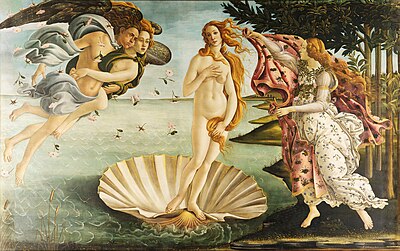
Monday, October 21, 2019

And a man with feathers on his feet...

Mr. Hermes!

Hello good friends! I apologize that this post has been so delayed. It's been an interesting week at work and to be honest? I feel like I kinda ran out of content on this one. But I do love Hermes, so I want to give him a fair go.

Hermes is just an all around great guy. He's also just a very all around guy. Last time I said that Apollo had a very miscellaneous nature? Well sometimes it seems like anything Apollo didn't pick up went to Hermes. Hermes is often called the God of Travelers and Roads. Which doesn’t sound like it would make him a top-echelon deity - after all Janus, the two-faced god of doorways and new beginnings and decisions, etc. isn't in the pantheon. But Hermes is much more. He is the God of Borders and of crossing over them - the God not only of arriving safely at your destination wherever that may be, of making a living as either a Merchant OR a highwayman and thief - but he is also the god of crossing the border between this world and the next - be that Hades or by it Olympos. He is also the God of Sport, for whatever reason, and of trickery. But he is not what I would call a classical trickster god - he's not Loki, and he rarely plays the villain, despite being a thief and a trickster. Those are just... charms of his personality. Hermes' cunning is commendable, and his abilities unworldly, even for the gods. Let's start as usual with his origin story.

Hermes is the son of Zeus by - you guessed it - Not Hera. Specifically, he is the son of Maia, one of the Pleiades - the seven daughters of Atlas, who we will get to later. Maia had it easier than Metis and Leto in some ways, as she seems to be one of the very few lovers Zeus took whom Hera never found out about (or never found out about until her child was fully grown). I say lovers… She wasn’t really Zeus’ lover. He definitely - you guessed it again - raped her. Big yikes. We don’t know a lot about Maia, but we know that after having this terrible crime committed against her and finding herself pregnant by Zeus, she secluded herself in a cave. Whether this was to avoid Hera or just because she wanted to be alone, you can judge. In either case she brought the child to term and gave birth to Hermes.

Now you might think that having a God of Mischeif as a child might be a nightmare, and I'm sure he was a handful, but as a child Hermes wanted nothing more than to make his mother happy and proud. To this end, he actually invented the Lyre, a stringed instrument often associated with Apollo. On it he played new music no one had ever heard before. The reason Hermes isn’t normally tied to this important creation of his is because the OTHER thing he did in the name of helping his mother is to steal an entire herd of cattle! Now I don't know why this would have helped, but I guess the god of thieves couldn't help himself. Now these weren’t just any cattle. They were the sacred white cows of the Sun, and they belonged to Apollo. Hermes snuck in one night and tied brushes to the cow’s tails, so that as they walked, they wiped away their own tracks, then he drove them all away. Apollo came back and found not only no cows, but no trace of their escape! But as I said before, Helios, the sun, sees all, and he helped Apollo track down his cows. When Apollo found young Hermes, he was upset but impressed, and brought the matter of the theft before the Gods, where it was agreed that Hermes could keep the cows if he paid Apollo for them, and in payment Hermes gave Apollo his lyre.

I’m having trouble remembering many other tales about Hermes at the moment (this blog post has been delayed because I kept thinking that if I gave myself some time I could think up some Hermes stories...) Mostly, Hermes is known for his powers more than any specific legends. Hermes can fly and run faster than anyone else, faster than the wind. He has wings on his sandals and on his helm. He can fly without these, but they are his major symbols. He is the Messenger of the Gods, and travels between the world of Olympus and Earth and Hades several times a day. Hermes always seems to have one foot in another world. It can make him seem a bit of a mystic. And since he has this ability, it is also part of his job to help escort the souls of the dead down to the gates of Hades. (We’ll get into this later, but there are four+ people responsible for different parts of a soul’s journey, including Thanatos, Hermes, Charon, and Hades in that order).

Hermes has a lot of jobs, but primarily Hermes is the god of travelers, so monuments to him were built along most roads, especially at crossroads, called Herms. These started as simple cairns (stacked stones), but later became small (or large!) pillars topped with a bust or Hermes. The other thing these pillars had was an erect penis… because… that was the important part of Hermes? I guess? Some of the waymarkers are literally just stone penises. The ancient greeks Really. Really. REALLY. Liked penises. Like. I cannot emphasize enough the amount of penis in Greek statuary.

One of the most interesting stories to do with these isn’t actually about Hermes, but since I’m on the subject - there is a real life story from the history of greece, during the Peloponnesian War (~430 BC), there was an Athenian general named Alkibiades. He was a friend (and possible lover) of Socrates, and the most playboy playboy who ever playboyed (that’s a verb now). Alkibiades’ life story is full of intrigue, and through the course of the war he switched sides not once but THREE times. This started when Alkibiades was sent out on an expedition in the name of Athens, but the night before he left someone - maybe a political rival, maybe Alki himself - went around Athens at night and desecrated as many Herms as they could find. And by desecrated, I mean they cut the penises off. Rightfully or not, this was soon blamed on Alkibiades, who by this time was off on campaign. He was recalled, but instead of going home just to be exiled, Alkibiades defected to the Spartan army, offering up secrets of Athenian strategy. This lasted him a while, until one of the Kings of Sparta found Alkibiades in bed with his wife, after which Alki fled to Persia, again offering to help them with his knowledge of Athens. He used his political wiles to outwit Persia, though, for his hometown of Athens’ gain, and in the end he did make it home, and was reinstated as a general, if you can believe it or not. He was very successful as a general, very tactical, good at making alliances. But somehow he’s mostly remembered for being in love with Sokrates and for the incident with the Herms.

Anyway. Back to the god. Hermes. He's not the most powerful of Gods, but he's very good to have on your side, and is generally very benevolent. He's a guide, he watches over, he's a blessing. Shockingly few stories deal with Hermes' rage or offense or anything like that. He's a chill dude. Very different than most other trickster gods.

Finding Hermes in modern day is interesting, because he's been through so many variations. For instance you've probably heard the phrase "Hermetically sealed". This is... kind of... based on Hermes' name. You see, there is another figure - who from what I can tell bears almost NO relation to the god Hermes except in name and in symbol (the caduseus) called Hermes Trismegistus. This other figure/tradition is important to things like alchemy (whence came the process of hermetically sealing a glass) and deistic mysticism, and various such things. So when you're looking for direct influence, it's hard to seperate Hermes and Hermes Trismegistus.

I suppose the most glaringly obvious use of Hermes is in our modern iconography. His symbols - The Caduceus and his winged sandles and helm - have made it pretty much untouched into modern day without really losing their meaning. Which is impressive! Winged sandles mean haste and safe travel to this day. The caduceus, interestingly, is a bit of a different story. The Caduceus - a rod surmounted by wings and surrounded by two entwined serpents, or simply a rod with two entwined serpents on the top - is technically NOT a symbol for the medical field, and never really has been. It's the magic rod or staff of Hermes, and should therefore be associated with travel and trade and the like. However, the Caduceus is normally mistaken for ANOTHER greek symbol - the Rod of Asclepius. Which is just a rod with a snake on it. We'll get to Asclepius later once we're done with the Pantheon.

The most obvious image of Hermes in modern day is DC comic's The Flash. He's basically... just Hermes. He's got Hermes' powers and even part of his costume. He's a bit "in-two-worlds" in that there are a lot of versions of Flash and he tends to make weird temporal problems, etc. You could argue the same about Marvel's Quicksilver, but really, The Flash is just Hermes. And the original comics weren't even subtle about it. Comic Books are and have always been Modern Mythologies. I could do a whole other post series on this, but there are a LOT of modern mythologies. Superman is a mythology, but so is George Washington, and the Alamo. It does not matter if something is history or fiction. It's all mythology.

Man I need to write a whole other post about this. But let's finish up with our boy Hermes first.

What truth does Hermes relay, and what danger does he pose? This is not an easy question for me, and is most of the reason this post has come so late.

Let's start with truth. How can our image of Hermes help us to better understand and praise God? I think the thing Hermes tells us most about God is how he watches over us. Due to the Herms, Hermes was an ever present reality to anyone travelling in Greece. There were reminders everywhere of his presence. They were so present they could be easy to ignore (until the penises go cut off, apparently). Sometimes we need these reminders (hopefully without the penises). It's why we hang crosses over everything. To remind us. The Almighty watches our comings and goings, our day to day lives. And he knows that crossroads and boundaries are important. There is a reason that God commanded his children Israel,
"Hear, O Israel: The Lord our God, the Lord is one. Love the Lord your God with all your heart and with all your soul and with all your strength. These commandments that I give you today are to be on your hearts. Impress them on your children. Talk about them when you sit at home and when you walk along the road, when you lie down and when you get up. Tie them as symbols on your hands and bind them on your foreheads. Write them on the doorframes of your houses and on your gates" (Deut. 6:7-9) 
God knows that we need reminders. And the Greeks knew it too. Hermes' ever present protection should remind us that we, too, serve a God who is ever watchful - a great deal more so than Hermes. He is a God who sees all, who is not bound by time or space, but witnesses all eternity. A God has promised to be with us, in waking and sleeping, now and forever. In this life and the life to come.

As for danger, there are two ways I could go. The first is to embrace Hermes' nature of having one foot in this world and one foot in another. This is kind of embracing the Hermes Trismigustus, mystic side. It's not unlike what I mentioned for Apollo. There are a lot of things people believe - from mild superstition to deeply felt spirituality - which hinge on their or other's connection to The Beyond. And the idea that if we could only step outside of ourselves we would find Truth. Truth that we have always known, deep down. Etc. But all of that aside, I think there is another much more subtle and obvious danger of the modern Cult of Hermes: Efficiency.

If Hermes stands for one thing, it's SPEED. And speed is something our culture is obsessed with. Speed, efficiency, and instant gratification. These are things we pour our efforts into and hang our hopes and lives on. It is one of the defining aspects of modern American capitalism - why buy local when Amazon can have it at your door in 2 days tops? And it damages people's lives. If you don't believe this, please go and look up any given news story about Amazon employees. But also look at other everyday people. People like you and me who so often act as if if I can't have it NOW, then I don't need it. And not just products! If I can't be good at drawing the first time, then I'm not going to do it. If I don't loose weight the first time I go to the gym, then what is the point? We guard our time like hoarding dragons, or spend it on a thousand little activities to make us feel useful, productive, efficient. When it comes to business, speed is the name of the game. But it's not constrained to the marketplace. Honestly, the fact that "business" and "busyness" are basically the same word says a lot.

I should go into this more but I really want to get this post finally published. What says in your life to you worship Haste? Where has Speed become your priority? And where have you forgotten that God watches over you?  Heavy questions, but freeing ones.

Thanks for reading.

Praise God from whom all blessings flow. Praise him all creatures here below. Praise him above ye heavenly host. Praise Father, Son, and Holy Ghost. Amen.

R